
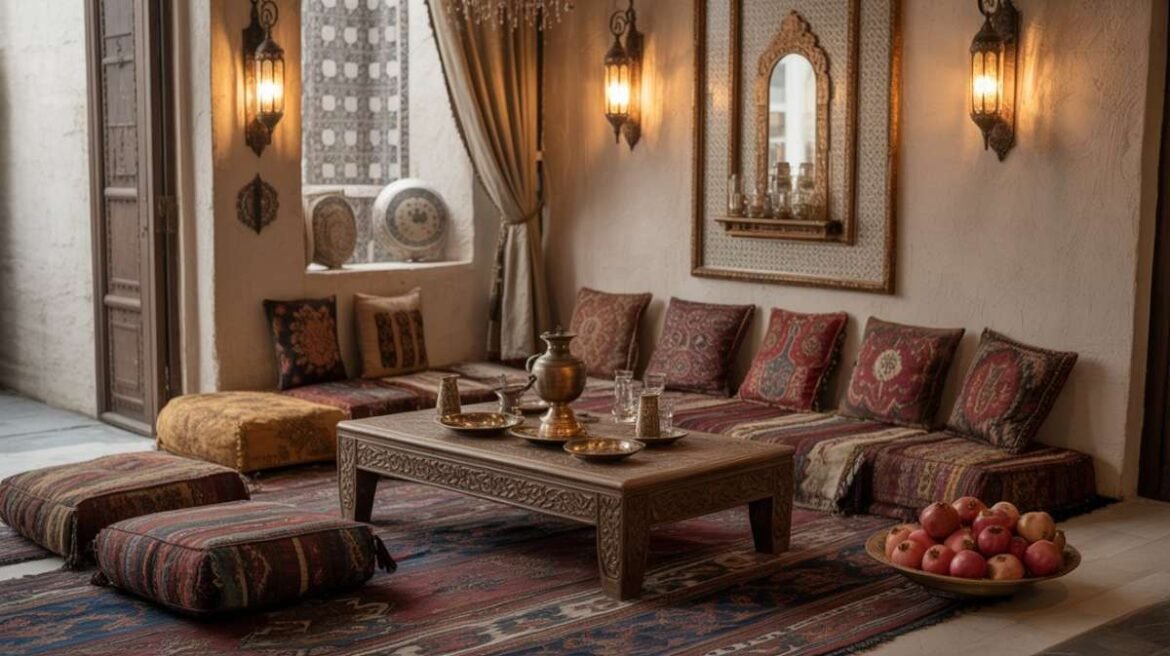
Turkish home decor combines hand-knotted rugs, Iznik ceramics, mosaic lamps, embroidered textiles, and Ottoman-inspired calligraphy to create warm, layered spaces rooted in centuries of Anatolian craft. A single authentic piece a kilim, a hand-painted coffee cup set, a colored-glass lantern is enough to shift the entire mood of a room. This guide covers every major category, what separates genuine pieces from cheap imitations, and how to use each element without your home looking like a souvenir shop.
I first walked into a workshop on a side street off the Grand Bazaar on a Tuesday morning in early 2024. The artisan was hand-knotting a rug in a pattern his father had taught him, the same geometric motif that had been made in his family’s village in eastern Anatolia for at least four generations. That is the thing most online guides miss entirely Turkish home decor is not a trend. It is a living craft tradition. That changes how you should buy, what you should look for, and how you should use it.
Below is a full breakdown of every major category of Turkish home decor, organized by what it is, why it works in a modern home, how to identify quality, and what to avoid.
What Defines Turkish Home Decor Style
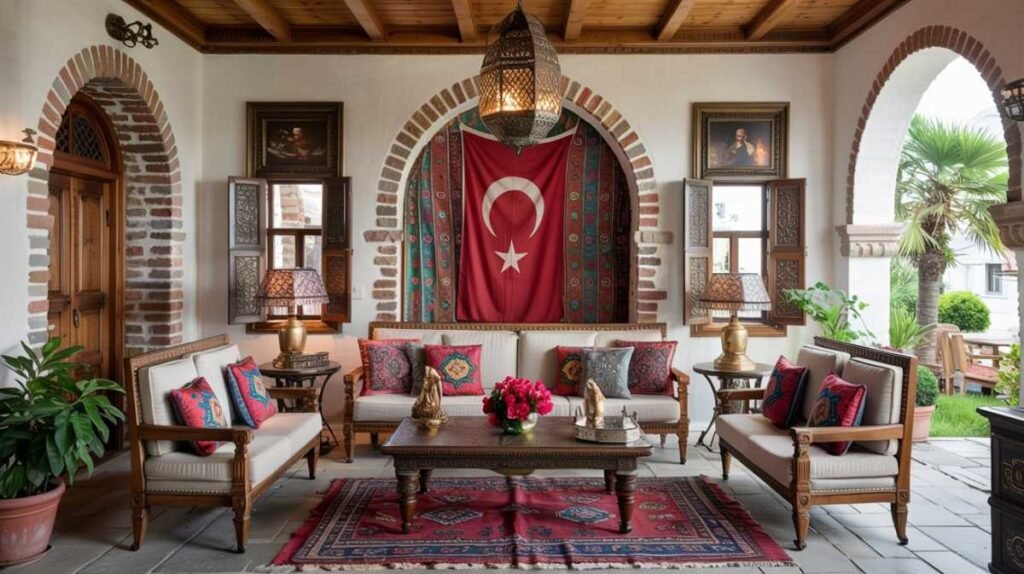
Turkish interior design sits at the crossroads of Ottoman, Anatolian, Byzantine, and Mediterranean influences. The result is a style that is simultaneously layered and warm rich color, tactile texture, and handmade detail without ever tipping into chaos.
The palette runs toward deep jewel tones: burgundy, sapphire blue, emerald green, terracotta, and hammered gold. These are not decorating trends they are the direct result of centuries of natural dye traditions and Ottoman court aesthetics. In a modern space, even a single textile in this palette reads as intentional and sophisticated rather than loud.
What makes this style work across wildly different home types minimalist apartments, farmhouse interiors, Bohemian spaces is the emphasis on handmade, tactile, one-of-a-kind pieces. A machine-made rug with a Turkish pattern is not Turkish decor. An actual hand-knotted kilim with uneven knots on the reverse is. That distinction matters more than anything else when you are buying.
Hand-Knotted Turkish Rugs and Kilims
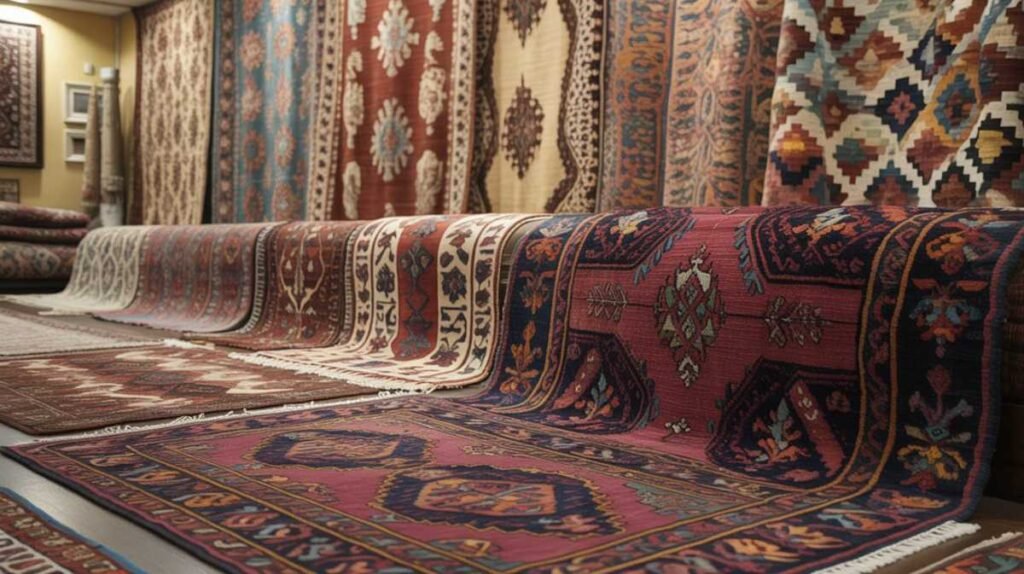
This is the foundation of the entire style, and rightly so. Turkish rugs have been internationally traded and collected since the 15th century. What you find today falls into two distinct categories:
Hand-knotted rugs are wool or silk, knotted pile, and take months to complete. Knot density (measured in KPSI knots per square inch) determines fineness. A quality wool rug starts around 40–80 KPSI. Silk rugs can reach 400+ KPSI and are an entirely different investment.
Kilims are flat-woven, no pile, typically wool or cotton. They are lighter, more geometric, more affordable, and arguably more practical for contemporary interiors. A vintage kilim from a village in Cappadocia will have slight asymmetries, irregular edges, and fading that only come from age and actual use and these are features, not flaws.
How to tell genuine from machine-made: flip the rug over. On a real hand-knotted piece, the pattern on the back is almost as clear as the front, and the knots are slightly irregular. On a machine-made rug, the back looks like canvas and the knots are perfectly uniform.
Also Read : Seasonal Home Decor Secrets
| Type | Materials | Price Range (USD) | Best For |
| Hand-knotted wool rug | Wool pile on cotton warp | $300–$2,500+ | Living room focal point |
| Silk rug | Pure silk pile | $1,000–$10,000+ | Display, low-traffic areas |
| Kilim (new) | Wool or cotton, flat-woven | $80–$600 | Casual layering, bohemian interiors |
| Vintage kilim | Aged wool, natural dyes | $200–$1,500+ | Character pieces, collectors |
| Overdyed vintage | Re-dyed vintage base | $150–$800 | Modern or eclectic spaces |
Placement advice: a large rug anchors a room. Do not push it against walls let furniture sit on it. A kilim over a neutral sisal base adds depth without overwhelming the space.
Turkish Textiles and Fabrics
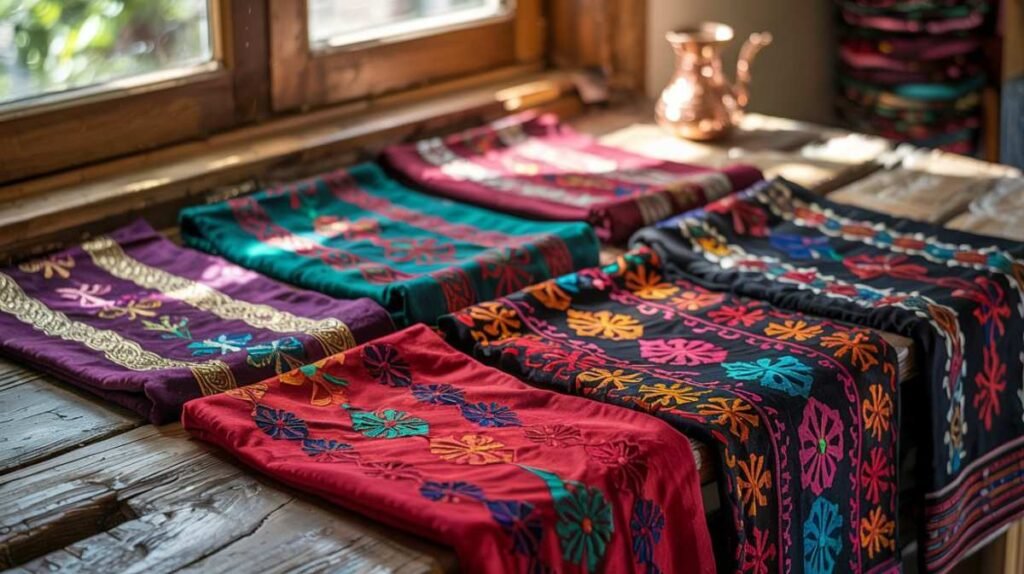
Beyond rugs, Turkish textile craft covers an extraordinary range. The Ottoman court drove centuries of innovation in silk weaving, embroidery, and velvet production and regional traditions survived long after the empire fell.
Peshtemals (also called fouta or hammam towels) are flat-woven cotton towels originally from Turkish bath culture. They dry fast, pack flat, look beautiful draped over a sofa or stool, and are genuinely useful. This is one of the easiest, most affordable ways to add authentic Turkish texture to any room.
Embroidered cushion covers from regions like Antalya and Bursa feature hand-stitched geometric and floral patterns on cotton or linen grounds. Pair them with solid velvet cushions in complementary jewel tones the contrast makes both look better.
Suzani-style throws (shared across Central Asian and Turkish textile traditions) add weight and warmth to a reading chair or the foot of a bed.
One honest note: a lot of what is sold as Turkish textile online is factory-produced in South Asia with Turkish-inspired patterns. The telltale sign is machine-perfect symmetry and pricing that seems too low to reflect actual handwork. Genuine embroidery has slight stitch variations and a hand feel that machine work cannot replicate.
Turkish Ceramics, Pottery, and Coffee Cup Sets
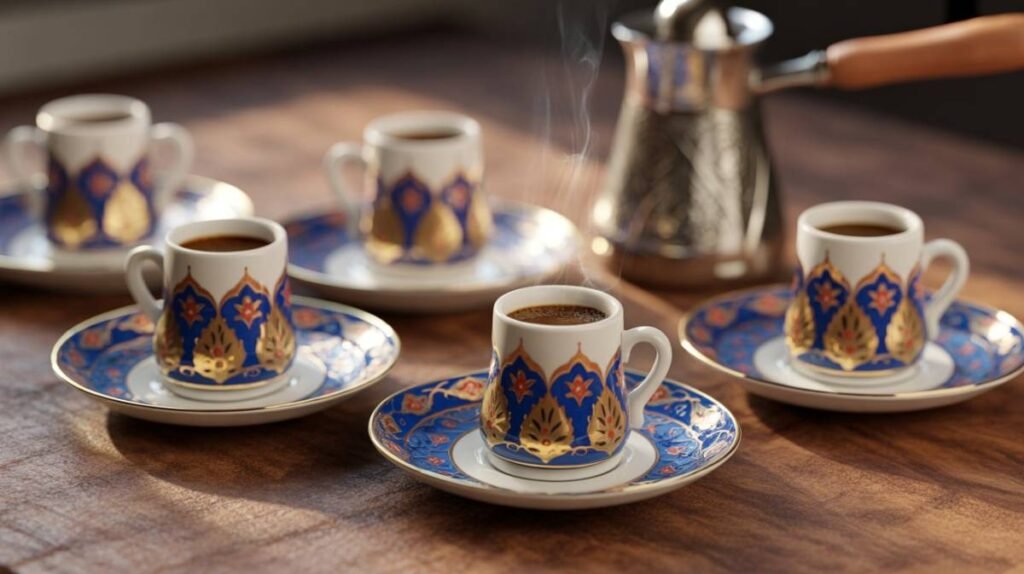
Iznik is the city that defined Turkish ceramic tradition. During the 16th century, Iznik potters produced tiles and vessels in a white tin-glazed earthenware decorated with cobalt blue, turquoise, and red motifs including tulips, carnations, arabesques, and calligraphy. These tiles covered the interiors of the Topkapi Palace and the Blue Mosque, and the tradition never fully disappeared.
Today, authentic Iznik-style ceramics come from workshops in Iznik itself and in Kütahya, which became the dominant production center after Iznik’s workshops declined in the 18th century. Kütahya ceramics are slightly less formal in their motifs more folk, more playful and they sit beautifully in everyday home settings.
Turkish coffee cup sets (fincan takımı) are a specific category worth knowing. A traditional set includes small handleless cups, matching saucers, and often a small tray. The cups hold about 60–80 ml, as Turkish coffee is traditionally served strong in small portions. portions. A hand-painted set from a Kütahya workshop makes an exceptional display piece on open shelving and a conversation piece every time it is actually used.
Decorative plates and tiles work well as wall art. A grouping of three to five hand-painted plates in graduated sizes, hung at varying heights, gives more visual interest than a single large piece and is more affordable than an equivalent framed artwork.
What to check when buying ceramics:
- Look at the reverse genuine hand-painted pieces often have a mark from the workshop and slight variations in brushwork on the back details
- Real Iznik-style ware has a smooth, slightly translucent glaze over the painted design not a rough surface or a decal that sits on top
- Avoid pieces with perfectly even, photographic-looking patterns these are transfers, not hand-painted
| Ceramic Type | Origin | Price Range | Ideal Use |
| Iznik reproduction tile | Iznik workshops | $15–$80 per tile | Wall art, coasters |
| Kütahya coffee cup set | Kütahya | $40–$200 | Display + actual use |
| Decorative plate | Kütahya or Avanos | $20–$150 | Wall groupings |
| Cappadocian pottery (Avanos) | Avanos, Nevşehir | $30–$250 | Vases, pitchers, display |
| Iznik signed piece | Iznik Vakfı | $200–$2,000+ | Collector investment |
Miniature Art and Calligraphy
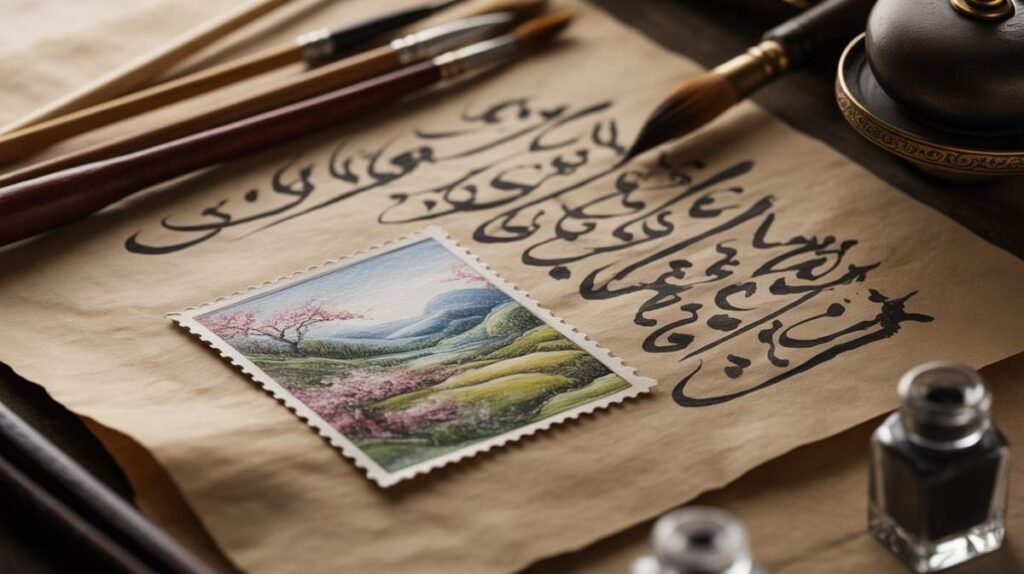
Ottoman miniature painting (tezhip and minyatür) and calligraphy are the art forms of the Turkish interior that most people overlook and that is exactly why they are worth using. Every other element in this guide is increasingly popular. A genuine piece of Ottoman-style calligraphy or gilded manuscript art on the wall is still unusual in most Western homes, which makes it striking.
Calligraphy (hat sanatı) in the Ottoman tradition works with Arabic script rendered in specific classical scripts: thuluth, naskh, diwani. Common subjects are Quranic verses, poetic lines from Rumi, or the bismillah. A framed calligraphy piece particularly on aged paper with gold illumination reads as serious fine art, not kitsch. The key is framing: a thin gold or dark wood frame on a white or cream mount does the piece justice.
Miniature paintings typically depict court scenes, battle scenes, garden gatherings, or botanical subjects in intricate detail. Originals are museum pieces. Contemporary reproductions from trained artists are widely available and affordable a quality A4-sized reproduction on aged paper costs $30–$120 and looks extraordinary in a gallery wall grouping.
Where the category gets complicated: a huge amount of “miniature art” sold in tourist markets is mass-printed on artificial aged paper. Hold a genuine painting at an angle you can see the brushwork raised slightly from the surface. A print is completely flat.
Mosaic Lamps and Turkish Lighting
This is the category with the widest gap between what actually works and what tourists buy and regret. The iconic Turkish mosaic lamp colored glass set in a metal frame, casting patterned light across a room is genuinely beautiful when done right. When done wrong, it looks like a cheap hotel lobby accessory.
What separates quality from tourist grade:
Glass quality: Genuine hand-cut mosaic glass has slight variation in color depth the blue areas are not perfectly uniform. Cheap versions use plastic gems or printed glass film that does not transmit light warmly.
Frame construction: The metal framework (usually copper or brass alloy) should be solid, with clean soldering at joints. Tap the frame lightly it should not flex.
Scale: Undersized pendant lamps look toy-like. For a pendant over a dining table, aim for at least 25–30cm diameter. For a statement piece, go larger.
Placement: A single large pendant over a dining table or in a hallway is more impactful than multiple small ones scattered throughout a room. In a minimalist space, a mosaic lamp is the one element of maximalism that holds everything together. In an already-layered bohemian space, layer two or three at different heights.
How to Actually Combine These Elements
The most common mistake is buying too many categories at once. Pick an anchor either a rug, a piece of art, or a light and build outward from its colors. A cobalt-and-white Iznik plate collection on a wall suggests a palette for cushion covers and throws. A terracotta-and-gold kilim anchors warm tones across the rest of the room.
A practical layering sequence:
- Start with a rug or textile as the color anchor
- Add lighting a pendant or lamp that picks up one color from the rug
- Layer ceramics on open shelves or a coffee table
- Add calligraphy or miniature art as wall pieces
- Use peshtemals, cushion covers, and throws for texture last
The mistake is adding everything simultaneously and hoping it resolves into coherence. It rarely does. Turkish interiors that photograph well are layered over time, not decorated in a single shopping session.
Frequently Asked Questions
What is Turkish home decor style called?
It is most commonly called Ottoman or Anatolian style a blend of rich color, handmade craft, and layered texture rooted in centuries of Anatolian design.
Are Turkish rugs and kilims the same thing?
No rugs have a soft knotted pile, while kilims are flat-woven, lighter, and more geometric.
How can I tell if a Turkish ceramic is genuine hand-painted?
Look for slight variation in brushwork and color depth; machine prints are perfectly uniform and sit on top of the glaze rather than under it.
How do I use Turkish decor in a modern minimalist home?
Pick one anchor piece a kilim or mosaic lamp and let it be the single element of complexity in an otherwise clean room.
Is Turkish home decor expensive?
It ranges widely a genuine hand-knotted rug runs $500–$5,000+, but ceramics and peshtemals are very accessible at $20–$120.

With over 5 years of hands-on experience in the creative arts, I have turned my passion for DIY and home styling into a mission to inspire others. As the lead creator at UnboxTreats, I specialize in the fine details of paper crafting, yarn work, and artisanal candle making. I test every craft and decor trend to ensure you get only the most reliable and creative advice for your home.