
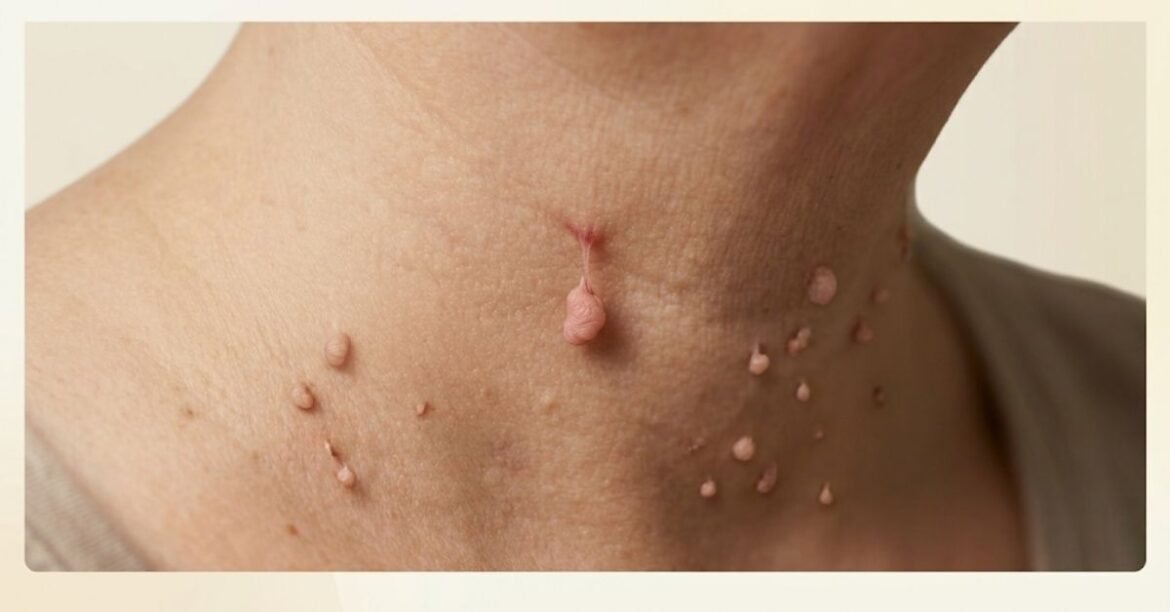
Learn what causes skin tags on the neck, when to worry, and the safest, effective derm-approved removal options from dermatologists today.
Introduction
If you have noticed a small, soft bump dangling from a thin stalk on your neck, you are far from alone. Skin tags on the neck are one of the most common benign skin growths a person can develop, and according to Banner Health, they can appear in up to 60 percent of the adult population, affecting men and women equally throughout their lives.
These growths, medically known as acrochordons, are almost always completely harmless. Still, plenty of questions naturally come up once you spot one — why did it appear, should it be removed, and is it safe to try and take care of it yourself at home? This guide answers every one of those questions clearly and accurately.
In this article, you will learn exactly why skin tags on the neck develop, the medical risk factors involved, the safest professional removal methods used by dermatologists, why at-home remedies are genuinely risky, and the specific warning signs that mean it is time to schedule a dermatology visit rather than wait it out.
What Are Skin Tags on Neck
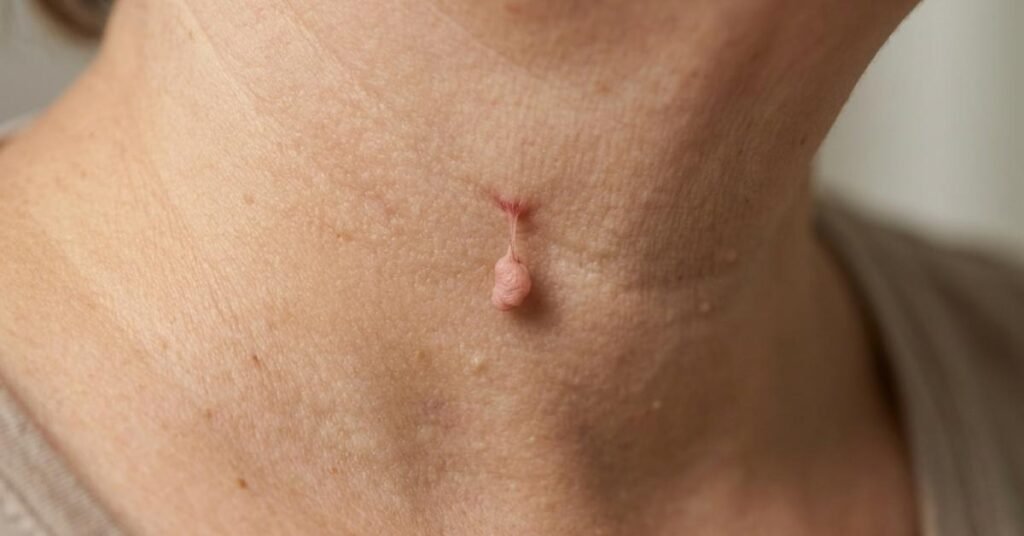
A skin tag is a small, soft, noncancerous growth that hangs from the skin, usually attached by a thin stalk of tissue. According to the Cleveland Clinic, skin tags form in areas where skin folds repeatedly against itself or against clothing, which is exactly why the neck is one of the most frequent locations for them to appear.
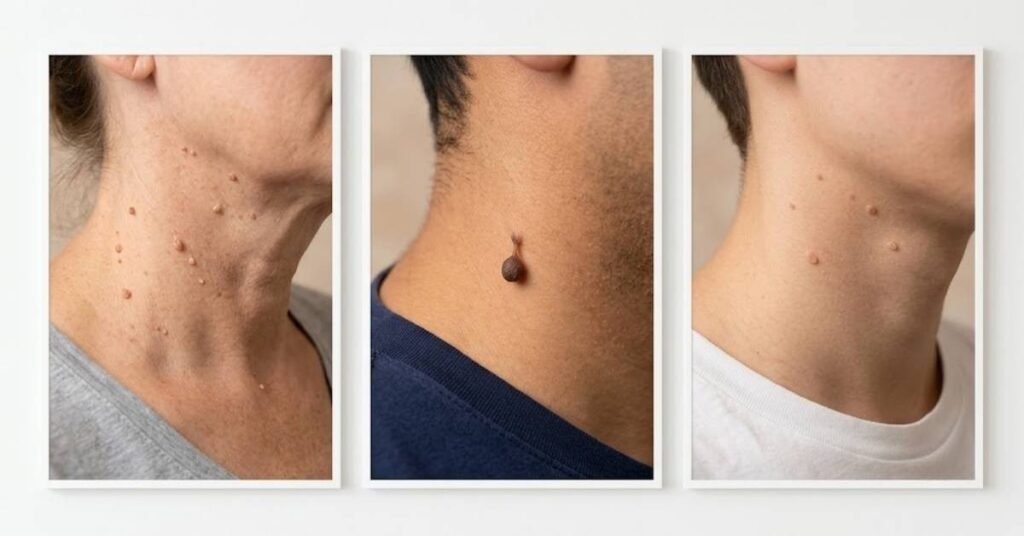
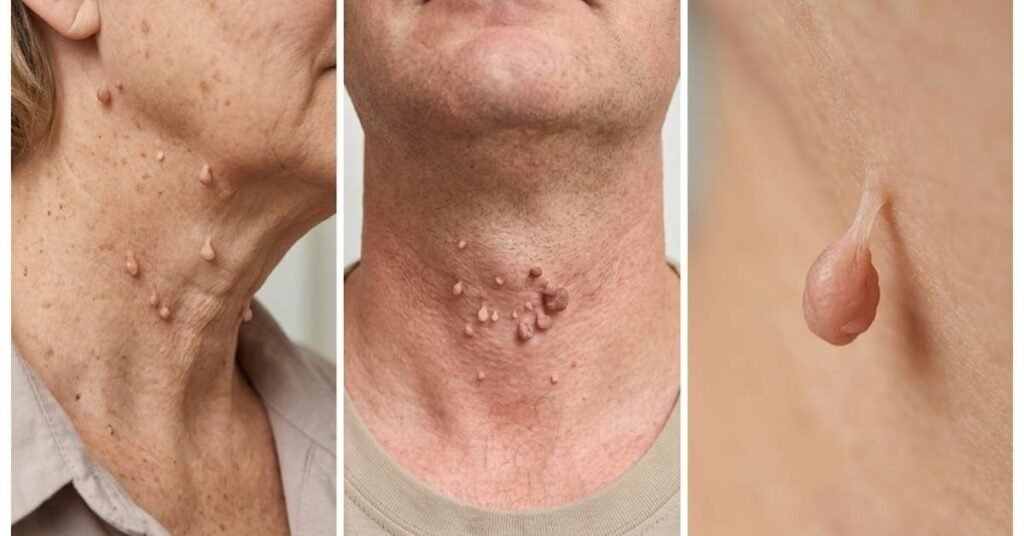
According to the American Academy of Dermatology, skin tags on neck and elsewhere may match your natural skin tone or appear slightly darker, and some develop a pink or reddish color if they become irritated. They can sit flush against the skin or dangle visibly, depending on how the stalk has formed underneath them.
Despite how alarming a new growth can feel, skin tags on neck are not something you were born with — they develop over time, often appearing seemingly overnight once a person reaches midlife or experiences certain hormonal or weight-related changes in their body.
Fact 1: Friction Is the Number One Cause
The single biggest contributor to skin tags on the neck is ordinary, everyday friction. According to a recent dermatology blog post by Dr. Ardesh, skin tags form when clusters of collagen and blood vessels become trapped within thickened skin, and the neck is especially prone to this due to constant movement combined with rubbing from collars, necklaces, and scarves.
The American Academy of Dermatology confirms that this is precisely why skin tags on neck commonly show up in the neck creases, particularly anywhere clothing or jewelry repeatedly rubs against the same patch of skin. Over months or years, that repeated friction is believed to encourage tiny growths to form right at the site of contact.
This is also why people who carry extra body weight, are pregnant, or simply have looser skin in general are statistically more likely to develop them. More skin folding against itself naturally means more friction, and more friction creates more opportunities for a skin tag to form.
Fact 2: Hormones and Metabolic Health Play a Real Role
Friction is not the only factor behind skin tags on neck. According to Dr. Ardesh’s clinical blog, hormonal fluctuations — particularly during pregnancy or while undergoing hormone therapy — are a well-documented internal trigger that can cause new tags to appear relatively quickly.
According to the American Academy of Dermatology, your risk also goes up if you have diabetes or metabolic syndrome, a cluster of conditions that includes high blood pressure, unhealthy blood sugar levels, extra fat around the waistline, and unhealthy cholesterol. The Cleveland Clinic adds that obesity and certain rare genetic conditions, such as Birt-Hogg-Dubé syndrome, can also raise the likelihood of developing multiple skin tags.
Genetics matter here, too. If a close blood relative has several skin tags, the American Academy of Dermatology notes that you have a meaningfully higher chance of developing them yourself, suggesting a real inherited component layered on top of the lifestyle and hormonal factors already at play.
Fact 3: Most Skin Tags on Neck Do Not Need Any Treatment
This is genuinely good news. According to the American Academy of Dermatology, skin tags on neck only need to be removed if they become irritated, bleed, feel painful, or develop somewhere — like the eyelid — where they interfere with vision. In every other case, simply leaving a skin tag alone is a completely reasonable choice.
If a skin tag is not bothering you physically, you do not have to do anything about it. Many people live for years with one or several small skin tags on neck and never feel any need to have them addressed. Removal becomes a personal decision rather than a medical necessity once the growth has been confirmed as harmless.
That said, if you simply dislike how a skin tag looks and want it gone for cosmetic reasons, dermatologists are absolutely able to help with that, too. Just keep in mind that the American Academy of Dermatology notes insurance companies generally classify removal performed purely for appearance as a cosmetic procedure, which is rarely covered by insurance plans.
Fact 4: Dermatologists Use Three Main Removal Methods
When a skin tag does need to come off, a board-certified dermatologist has a small handful of quick, well-established techniques to choose from. According to the American Academy of Dermatology, the right method depends mainly on the size of the growth, exactly where on the neck it sits, and a few other individual considerations.
Cryosurgery uses an extremely cold substance, typically liquid nitrogen, to freeze the tissue until it dies off. The treated area may form a small blister or scab afterward, and once that scab naturally falls away, the skin tag goes with it. Some dermatologists combine this with a quick snip of the base for faster results.
Electrodesiccation relies on a tiny needle that delivers a small electric current directly into the growth, destroying it almost instantly. According to Dr. Michele Green, a board-certified NYC dermatologist, this current also cauterizes the area as it works, meaning there is essentially no bleeding. A small scab forms afterward and typically heals within about a week.
The simple snip method involves numbing the area first, then using sterile surgical scissors or a blade to cut the skin tag away cleanly at its base. A solution is applied afterward to stop any minor bleeding, and the whole in-office process usually takes only a few minutes from start to finish.
Fact 5: At-Home Removal Carries Real Risks
It can be tempting to deal with skin tags on neck yourself, especially with so many home remedies circulating online. However, every major dermatology source consulted for this guide strongly discourages this approach, and for good reason.
According to the American Academy of Dermatology, the U.S. Food and Drug Administration has not approved any over-the-counter product specifically for skin tag removal, and the agency has actually warned consumers not to use them because of the genuine harm they can cause. Products marketed for removing skin lesions at home have been linked to injuries and permanent scarring.
Wart removers deserve a special mention here. Because some skin tags visually resemble warts, people sometimes assume the same treatment will work on both. In its opinion, it does not. Warts are firm and require strong medication to break down, while skin tags are soft tissue — applying wart remover to a skin tag can damage the surrounding skin and lead to irritation or scarring rather than safe removal.
Home remedies involving tea tree oil or apple cider vinegar are also commonly recommended online, but according to a recent clinical blog, these substances can cause skin irritation, chemical burns, or infection, particularly in the sensitive skin folds of the neck where skin tags most often appear.
Fact 6: Sudden or Unusual Changes Deserve a Visit to a Dermatologist
While the vast majority of skin tags on neck are nothing to worry about, certain changes are worth getting checked out promptly rather than waiting and watching. According to the American Academy of Dermatology, suddenly developing many new skin tags at once, while rare, can occasionally signal that something else is happening inside the body and is worth discussing with a board-certified dermatologist.
You should also seek a professional evaluation, according to multiple dermatology sources, if a growth changes color, grows noticeably larger or faster than expected, starts bleeding without any clear cause, or simply feels different in texture compared to your other skin tags. These are not signs of panic, but they are signs that warrant a proper medical opinion rather than a guess based on appearance alone.
It is also worth remembering that skin tags can sometimes be mistaken for other types of skin growths, including moles or, in rare cases, early skin cancers. A dermatologist is trained to tell the difference reliably, which is exactly why the American Academy of Dermatology recommends professional evaluation whenever you are uncertain about a new or changing growth on your neck.
Fact 7: Skin Tags on Neck Are Not Contagious and Cannot Spread Through Contact
A common misconception is that skin tags can somehow spread from one person to another, similar to a viral skin condition. According to a recent dermatology clinic resource, this is simply not true — skin tags on neck are not contagious in any way and cannot be transmitted through touching, sharing clothing, or any other form of physical contact.
It is also worth understanding that removing one skin tag does not guarantee new ones will not eventually form nearby, especially if the original contributing factor — whether that is ongoing friction, hormonal changes, or a metabolic condition — has not been addressed. According to a recent clinic resource, weight loss specifically may reduce the formation of new skin tags over time by decreasing skin fold friction and potentially improving related metabolic factors as well.
Knowing this can be genuinely reassuring. A new skin tag forming after a previous removal is not a sign that anything went wrong with the original treatment — it simply means the same underlying conditions that created the first one are likely still present in your skin and body.
When to See a Dermatologist for Skin Tags on Neck
According to the American Academy of Dermatology, a board-certified dermatologist can quickly and safely remove one or more skin tags during a single office visit, usually without needing any follow-up appointment afterward. This makes professional removal a remarkably low-effort solution once you have decided treatment is the right choice for you.
Schedule a visit if your skin tag becomes irritated from rubbing against jewelry, clothing, or a seatbelt, if shaving has accidentally nicked it, or if you simply want it removed for personal or cosmetic preference. A dermatologist can also confirm with confidence that what you are looking at is genuinely a skin tag and not something else that requires a different kind of attention or treatment plan.
Conclusion
Skin tags on neck are an extremely common, almost always harmless part of how skin changes throughout adult life. They develop primarily from friction, supported by hormonal shifts, genetics, and certain metabolic conditions, and in most cases, they require no treatment at all unless they become irritated, painful, or cosmetically bothersome to you personally.
When removal does make sense, a board-certified dermatologist offers fast, safe, in-office options like cryosurgery, electrodesiccation, and simple surgical snipping — all of which carry far less risk than any at-home remedy you might find online. If you ever notice a sudden cluster of new growths or a tag that looks or behaves differently from the others, do not hesitate to book an appointment. A quick professional check brings real peace of mind, and that alone makes it worth the visit.
Frequently Asked Questions (FAQs)
Q1: Why do I suddenly have skin tags on my neck? Skin tags on neck commonly develop because of ongoing friction from collars, necklaces, or skin folds rubbing repeatedly against each other. Hormonal changes, pregnancy, excess weight, genetics, and conditions like diabetes or metabolic syndrome can all increase your likelihood of developing them, sometimes causing several to appear within a relatively short period of time.
Q2: Are skin tags on neck dangerous?
No, skin tags on neck are benign and essentially always harmless. According to the American Academy of Dermatology, they only require attention if they become irritated, painful, or bleed. If a growth changes color, grows rapidly, or behaves unusually, a dermatologist should evaluate it simply to rule out other, unrelated skin conditions.
Q3: Can I remove skin tags on neck myself at home?
Dermatologists strongly advise against home removal. The FDA has not approved any over-the-counter skin tag removal product and has specifically warned against using them due to risks of injury, infection, and permanent scarring. Wart removers and substances like apple cider vinegar can also irritate or damage the sensitive skin around skin tags on neck.
Q4: What is the most common professional treatment for skin tags on neck?
Electrodesiccation, cryosurgery, and simple surgical snipping are the three primary methods dermatologists use for skin tags on neck. Each takes only minutes during an office visit, requires little to no downtime, and is selected based on the specific size and location of the growth being treated.
Q5: Will skin tags on neck come back after removal?
Removing an existing skin tag does not prevent new ones from eventually forming, particularly if the original cause — such as friction or a hormonal or metabolic factor — is still present. According to dermatology sources, maintaining a healthy weight and reducing repetitive friction around the neck may help lower the chance of new skin tags on neck developing over time.

With over 5 years of hands-on experience in the creative arts, I have turned my passion for DIY and home styling into a mission to inspire others. As the lead creator at UnboxTreats, I specialize in the fine details of paper crafting, yarn work, and artisanal candle making. I test every craft and decor trend to ensure you get only the most reliable and creative advice for your home.