
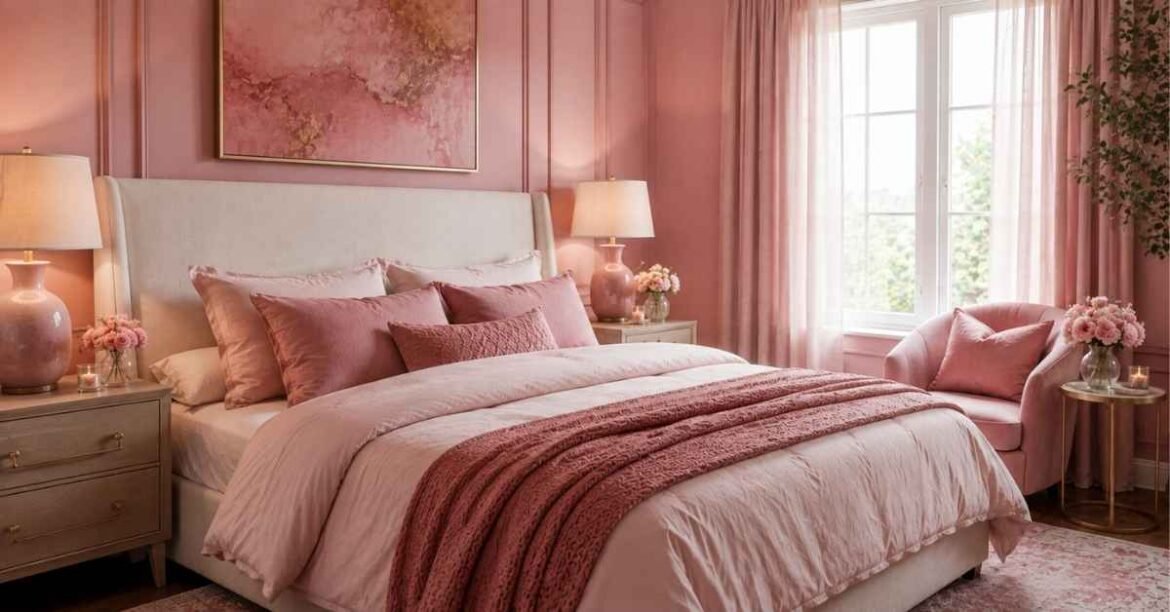
Thinking about pink bedroom decor but afraid to commit? I redesigned my own room and learned 8 painfully honest lessons you should hear first.
Introduction
I spent two full years staring at off-white bedroom walls and convincing myself they looked elegant and calm. Honestly, they just looked unfinished — like a room still waiting for me to make a real decision. Everything shifted the afternoon I painted one wall a warm blush tone and stepped back to take it in. The space immediately felt warmer, more intentional, and genuinely mine. That one experiment with pink bedroom decor was the moment I stopped playing it safe and started actually loving the room I slept in every night.
Since then, I have repainted, reupholstered, sampled dozens of shades, and made a handful of genuinely costly mistakes. What I eventually learned is that pink bedroom decor is not one look — it covers an enormous spectrum from barely-there blush to dramatic raspberry, from peachy terracotta to moody mauve, and each shade creates a completely different emotional atmosphere. If you are considering trying this color but feel hesitant, I hope the real, unfiltered account I am sharing here helps you avoid the harder lessons I had to learn for myself.
Why Pink Works Better Than You Expect
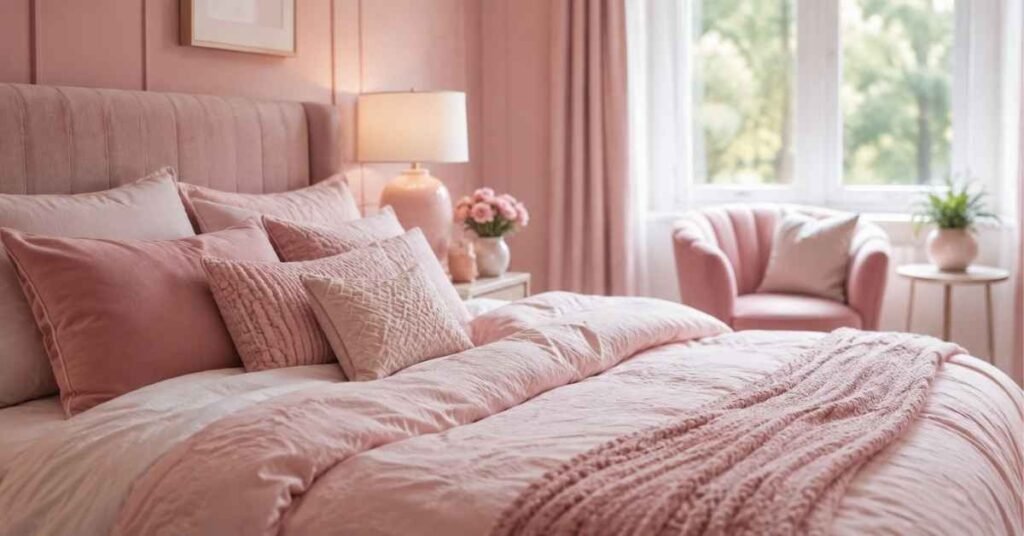
Before I committed, I had real doubts. Pink felt like a color that demanded full buy-in to a very specific and potentially polarizing aesthetic. What changed my mind was reading how consistently leading interior designers praised it for exactly the qualities I was looking for. Veranda designers describe pink rooms as giving spaces “a glowy, contemporized look,” and BHG’s archive of expert rooms consistently shows it making bedrooms feel warmer without adding visual weight or drama. The reason pink bedroom decor achieves this so reliably is that rosy tones absorb and reflect warm lamplight beautifully in the evenings, softening the room in a way that cooler blues and greens simply never manage.
Choosing the Right Shade — This Part Matters Most
If there is one thing that separates successful pink bedroom decor from a result you paint over within a year, it is choosing the right shade for your specific room, your natural light, and the furniture already surrounding you. Pink is not a single color — it is an entire family of tones, and understanding the differences between them before you buy a single paint pot is genuinely worth your time.
Blush and Ballet Slipper Pinks
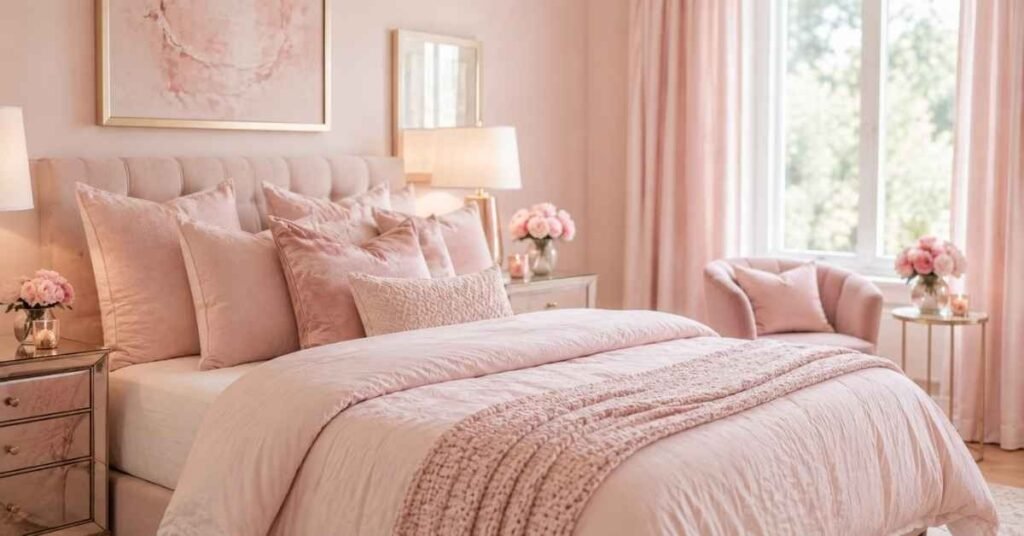
These are the most forgiving entry point for anyone new to pink bedroom decor. They read as a sophisticated warm neutral in bright daylight and shift into something unmistakably rosy under evening lamplight. In my reading corner, I used Farrow & Ball’s Pink Ground, and the transformation between afternoon and nine at night was amazing. Starting with blush is the lowest-risk way to bring the palette into your bedroom for the first time.
Dusty Rose and Mauve
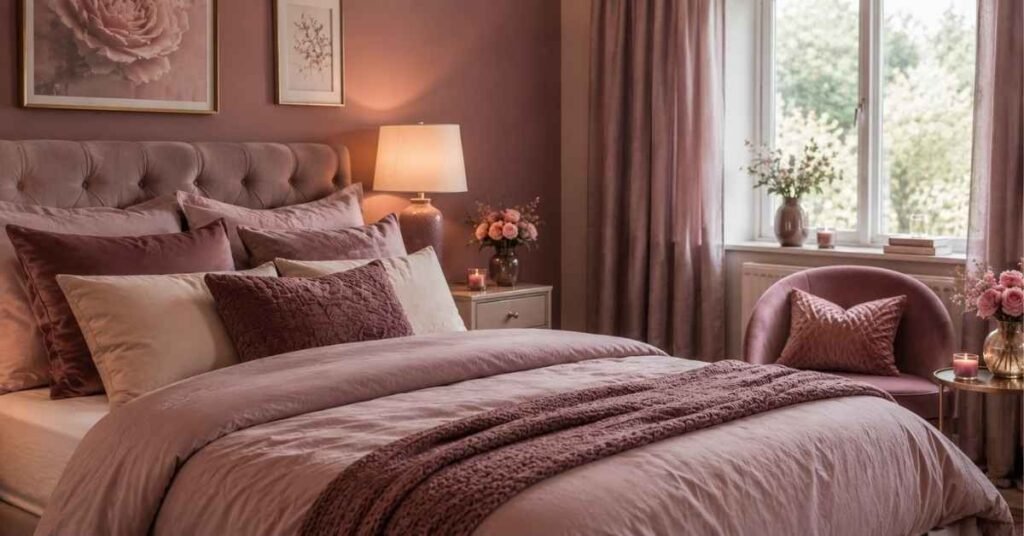
Dusty rose carries a grey undertone that gives it a moodier, more romantic quality than pale blush. These shades absorb rather than bounce light, creating an enveloping atmosphere that makes a bedroom feel genuinely restful. Dusty rose is universally flattering alongside warm woods, cream linens, and aged brass hardware without requiring any additional effort.
Peach, Terracotta, and Earthy Pinks
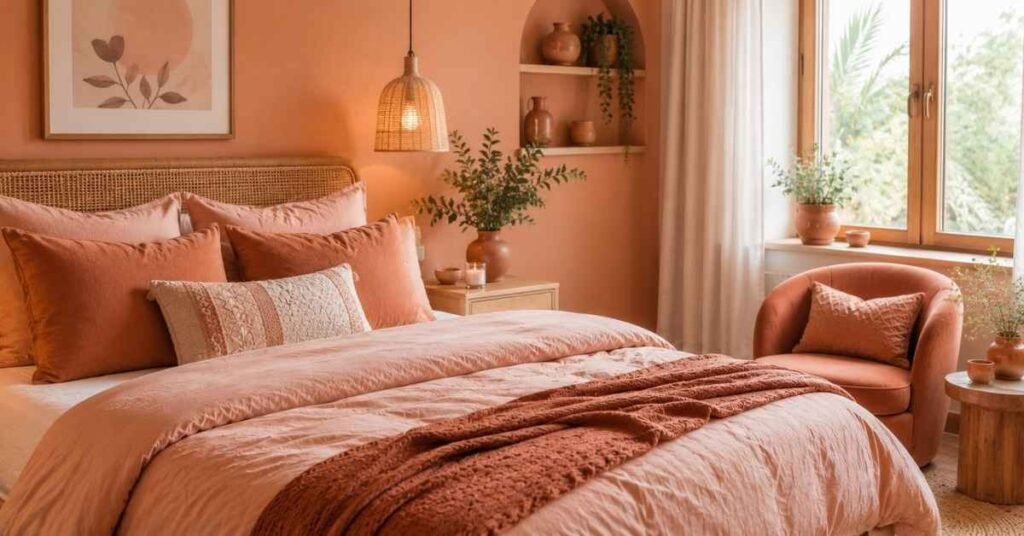
Both BHG and Veranda flag earthier pinks as among the fastest-growing bedroom color choices right now. These warmer tones bridge the gap between true pink and warm neutral, making them exceptionally easy to commit to long term. If you want color without full commitment to a rosy palette, a terracotta-leaning blush is genuinely the smartest compromise available.
Bold and Deep Pinks
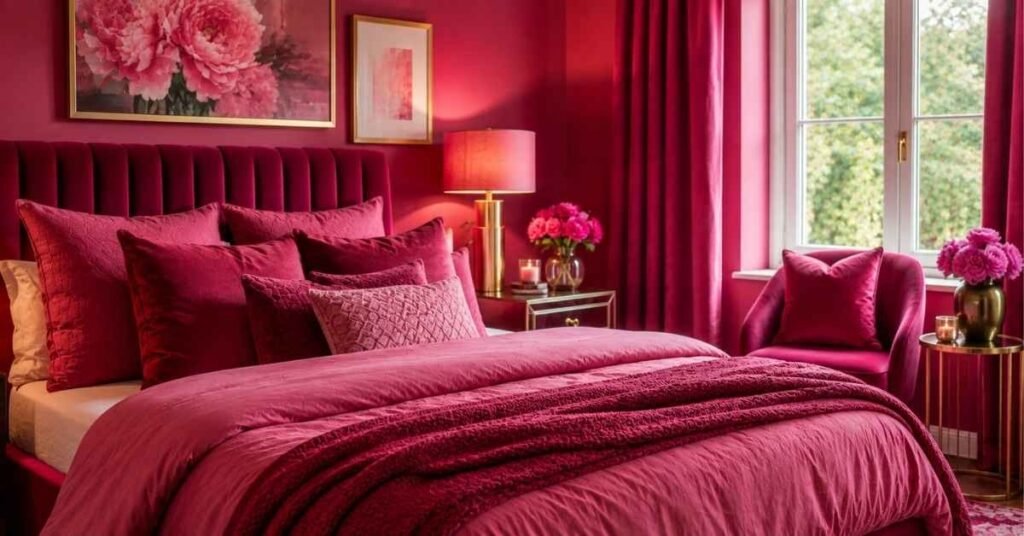
Hot pink and raspberry demand more confidence but reward it generously. Anchored by warm cream, olive, or rich walnut, they create results that stop visitors at the door. I tested deep raspberry on the inside of my wardrobe doors and it became one of the best surprises in the entire room.
How I Actually Styled My Room
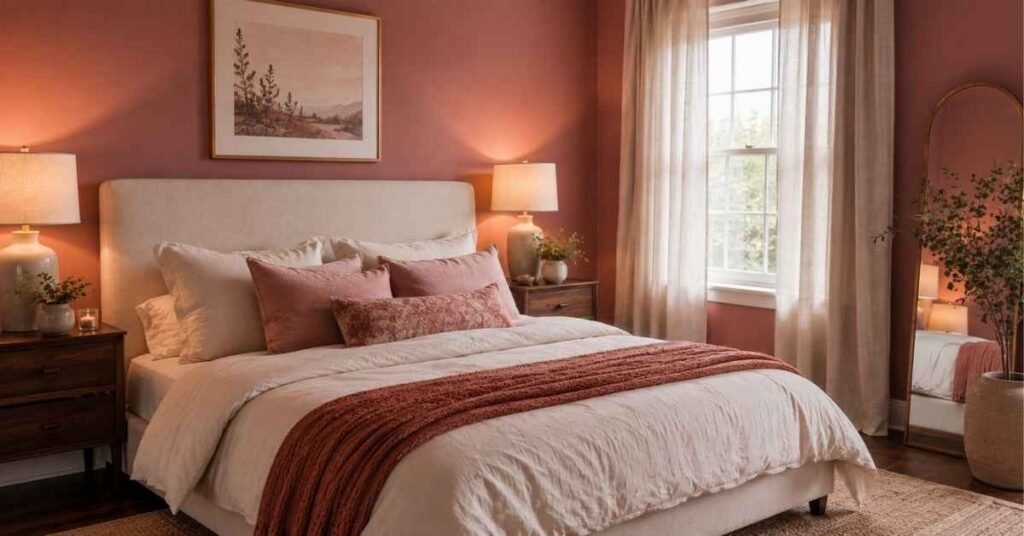
Once I settled on warm dusty rose for my main walls, I realized the surrounding choices mattered just as much as the paint itself. Getting pink bedroom decor right is never only about the wall color — it is about everything you build thoughtfully around it. I kept my furniture neutral: a cream linen headboard, warm walnut side tables, and unlined off-white curtains that allowed the walls to carry all of the color without competition. This approach comes up repeatedly in expert sources, and it absolutely held true in my own room.
For textiles, I layered deliberately rather than matching. My bedding is a natural cream duvet with a faded rose cushion at the front and a deep terracotta throw folded across the foot. The combination of different pink tones — one pale, one earthy — makes the pink bedroom decor feel collected and intentional rather than carefully coordinated. Switching all my bedroom bulbs to warm 2700K options made an enormous difference in how the walls read at night.
The Mistakes I Made
Honest guides about pink bedroom decor rarely talk about the failures, and I think that leaves people unprepared. My worst error was buying a hot pink velvet accent chair without testing it physically against my dusty rose walls. On a mood board the contrast looked exciting. In the actual room, two different pinks competed aggressively with each other, and the chair had to leave. Always test upholstery samples directly against your paint in real lighting before committing to anything expensive.
My second mistake was not anticipating how directional light affects a pink shade. The same paint that looked beautifully warm on my south-facing wall looked noticeably purple in a north-facing corner. I added a floor lamp aimed directly at that wall and solved it, but I wish I had foreseen it before finishing the room.
Paint Shades Worth Knowing
Through personal testing and cross-referencing recommendations from both BHG and Veranda, these are the shades I found most reliable for pink bedroom decor across varied lighting and interior styles. Always sample them large on your actual wall before painting the whole room.
| Shade Name | Brand | Undertone | Works Best In |
| Pink Ground | Farrow & Ball | Warm Neutral | All-day natural light |
| Nancy’s Blushes | Farrow & Ball | Soft Pink | Bright daylight rooms |
| Curtis Salmon | Benjamin Moore | Peach-Warm | Evening lamplight |
| Dinner Party | Benjamin Moore | Deep Raspberry | Accent wall or ceiling |
| Fowler Pink | Farrow & Ball | Apricot-Warm | Period or warm interiors |
What I Would Tell You Before You Start
The one piece of advice I most wish I had received before beginning my pink bedroom decor project is this: do not let fear push you toward a shade so light it makes no visible impact at all. One of the most common mistakes is choosing a blush that is so pale that it reads as dirty white in normal lighting. Go one or two shades deeper than you think feels safe, sample it large on the actual wall, and observe it across morning, midday, and evening before painting the full room. That patience is genuinely the difference between a room that transforms and one that merely confuses.
Final Thoughts
Pink has centuries of serious design history behind it — from the English country houses of legendary decorators to the dramatic modern rooms of Martyn Lawrence Bullard and Miles Redd. Pink bedroom decor is not a fleeting trend. When executed with real intention and the right shade selection, it is one of the most emotionally effective ways to make a bedroom feel like a genuine sanctuary rather than just a place to sleep.
My bedroom is now the room in my home I love most. Every evening when I walk in, the walls hold the lamplight in that warm rosy way that makes the entire space feel settled. All it took was trusting the color and making deliberate choices about everything around it. I hope the honest account of my own pink bedroom decor journey — including the missteps — makes yours a little smoother and a whole lot more enjoyable.
Frequently Asked Questions
1. What furniture works best alongside pink bedroom decor?
Warm neutrals including cream, warm white, natural oak, and walnut pair beautifully. Brass and gold metal accents complement the palette naturally, while olive green or terracotta accessories add grounding contrast without clashing.
2. Can pink bedroom decor work in small rooms?
Yes — lighter blush shades actually make small rooms feel more spacious by reflecting warm light softly. Avoid very saturated or dark pinks in rooms with limited natural daylight or low ceilings.
3. How do I prevent pink from looking too purple on walls?
Always choose a pink with a warm or peachy undertone rather than a cool or lavender base. Warm undertones stay friendly across most lighting conditions, while cool-based pinks risk looking purple in dim or north-facing rooms.
4. How can I add pink bedroom decor without repainting?
Layer it through textiles — a blush linen duvet, rose velvet cushions, or a dusty terracotta throw immediately bring the warmth of pink bedroom decor without requiring any wall commitment at all.
5. Does a pink bedroom suit men’s spaces too?
Absolutely. Deeper shades like salmon, dusty mauve, and terracotta-pink feel grounded and sophisticated when paired with natural wood, aged leather, and linen. The key is choosing a shade with an earthy warmth rather than a bright or sweet tone.

With over 5 years of hands-on experience in the creative arts, I have turned my passion for DIY and home styling into a mission to inspire others. As the lead creator at UnboxTreats, I specialize in the fine details of paper crafting, yarn work, and artisanal candle making. I test every craft and decor trend to ensure you get only the most reliable and creative advice for your home.